Energetically Enhanced
Remediation Systems
A new field of investigation combining established phytoremediation science, soil biology, and experimental energetic technologies — atmospheric charge, applied electric fields, bioelectrical stimulation — to explore what may be possible when we add energy to the equation.
We present this honestly: some approaches are peer-reviewed, others are frontier. We will always tell you which is which.
No courses exist yet — join the waitlist. Founding member pricing for early registrants.
What Happens When You Add Energy to Remediation?
Conventional phytoremediation — using plants to extract, contain, or break down contaminants — is slow. A sunflower field can take years to meaningfully reduce heavy metal concentrations in contaminated soil. Bioremediation with microbes can stall if soil chemistry is inhospitable.
A growing body of research suggests that adding energy inputs — applied electric fields, atmospheric charge collection, bioelectrical stimulation — may accelerate biological activity, improve ion mobility, and enhance plant uptake rates. The operative word is may. The mechanisms are plausible. The peer-reviewed literature on electrokinetics is substantial. The electroculture literature is more limited and more contested.
Energetic Growers Academy is building a curriculum that treats this honestly: distinguishing established science from frontier investigation, and training practitioners to design experiments rather than just follow recipes.
Established Science
Phytoremediation, bioremediation, electrokinetics, and soil microbiology have peer-reviewed foundations we teach rigorously.
Emerging Investigation
Atmospheric charge collection, passive antenna systems, and bioelectrical enhancement have limited but growing research. We teach the evidence clearly.
Active Experimentation
Where data is thin, we build methodology. Students design, document, and share field experiments that contribute to the knowledge base.
Community Data
The Sunflower+ Project aggregates citizen science observations into a shared dataset accessible to all enrolled students.
Choose Your Track
The science is continuous — from backyard garden to remediation field site. Where you enter depends on your context and goals.
Community Restoration Path
Practical tools, honest science, and a community to work alongside.
Who This Is For
Concerned about legacy contamination, road salt, pesticide drift, or urban soil quality.
Food safety questions, soil regeneration, and practical low-cost restoration on your own land.
Real-world environmental science curriculum with hands-on citizen science components.
Neighborhood restoration projects, vacant lot remediation, and building local environmental capacity.
Agricultural contamination, flood-deposited sediments, and land you've inherited with unknown history.
People who want to collect real data, contribute to research networks, and learn the field methodology.
Primary Course
Learn affordable, practical ways to use plants, soil biology, and simple energetic approaches to improve degraded land — and participate in community restoration efforts that generate real data.
7 Modules
- 01 Understanding Contamination
How to read public environmental records, interpret basic soil test results, and communicate risk to neighbors and local officials.
- 02 Foundations of Phytoremediation
Peer-reviewed science behind phytoextraction, phytostabilization, and rhizofiltration — with case studies and plant selection guides.
- 03 Bioremediation Basics
Bacterial and fungal communities that metabolize organic contaminants. How to encourage them and what the evidence actually shows.
- 04 Soil Biology Fundamentals
Mycorrhizal networks, bacterial biomass, earthworm ecology, and how healthy soil structure amplifies remediation outcomes.
- 05 Passive Electroculture & Antennaculture
An honest look at atmospheric charge, antenna geometry, and passive systems as potential growth-enhancement approaches. What the data says and what it does not.
- 06 Community Restoration Projects
Site selection, stakeholder engagement, planting schedules, grant language, and documentation templates for neighborhood-scale projects.
- 07 Citizen Science Data Collection
Low-cost soil and water testing, observation protocols, field data sheets, and how to connect your project to broader research networks.
Practitioner & Professional Path
Advanced training for people working at the intersection of environmental science and energetic systems.
Who This Is For
Exploring enhancement technologies that could expand your service offerings and improve site outcomes.
Practitioners looking for emerging tools to complement established phytoremediation practice.
Independent and institutional researchers investigating energetic enhancement mechanisms.
Organizations managing remediation sites with limited budgets and a mandate for innovation.
Public land managers considering lower-cost alternatives or enhancement strategies for contaminated parcels.
Technically sophisticated practitioners running documented field experiments who want rigorous methodology.
Four Courses · Full Curriculum
Electroculture for Remediation
$297 · Founding rateElectrical stimulation of root-zone biology, electrode selection and placement, current density parameters, and documented response data across soil types.
- Electrode materials & geometry
- Current density vs. plant stress thresholds
- Root-zone pH effects
- Rhizosphere microbial response data
- Experimental protocol design
Electrokinetic Remediation
$397 · Founding rateDC field-driven transport of ions, water, and contaminants through soil. Engineering fundamentals, field architecture, and integration with biological approaches.
- Electroosmosis & electromigration
- Electrode array design
- Heavy metal transport mechanics
- pH front management
- Field monitoring & adjustment
Integrated Remediation Systems
$497 · Founding rateCombining phytoremediation, bioaugmentation, and electrical enhancement into site-specific treatment trains. System design, sequencing, and outcome measurement.
- Treatment train architecture
- System synergy & conflict points
- Pilot project design
- Cost-benefit frameworks
- Regulatory navigation basics
Environmental Monitoring & Instrumentation
$297 · Founding rateLow-cost to professional-grade monitoring: soil gas sensors, data loggers, field electrochemistry, and building dashboards that communicate results to stakeholders.
- Sensor selection & calibration
- Data acquisition hardware
- Field electrochemistry
- Statistical analysis basics
- Reporting for non-technical audiences
Bundle pricing available. Full curriculum bundle: $997 founding rate (list price will be $1,497+). Reserved for early registrants only.
"10 Low-Cost Ways to Improve Soil Recovery Using Plants and Biology"
A practical, evidence-grounded guide covering affordable remediation strategies anyone can implement — from simple plant species selection to low-tech soil biology support. Includes a reference table of hyperaccumulator plants, suggested soil test protocols, and an introduction to citizen science data collection.
- Hyperaccumulator plant reference table (heavy metals)
- 5 ways to support microbial remediation without expensive amendments
- How to read a basic soil test for contamination indicators
- 3 passive electrical approaches worth experimenting with
- Where to find public contamination records for your area
"Emerging Enhancement Technologies for Environmental Remediation"
A research-oriented brief synthesizing current literature on electrical, biological, and energetic enhancement approaches to remediation. Covers electrokinetics, bioelectrical stimulation, and passive plant-based stimulation — with honest assessment of evidence quality, study scale, and what remains unresolved.
- Electrokinetic remediation: mechanism review and field results
- Rhizosphere electrical stimulation: what the data shows
- Atmospheric charge collection: plausibility analysis
- Enhancement vs. standalone remediation: research gaps
- Experimental design framework for field practitioners
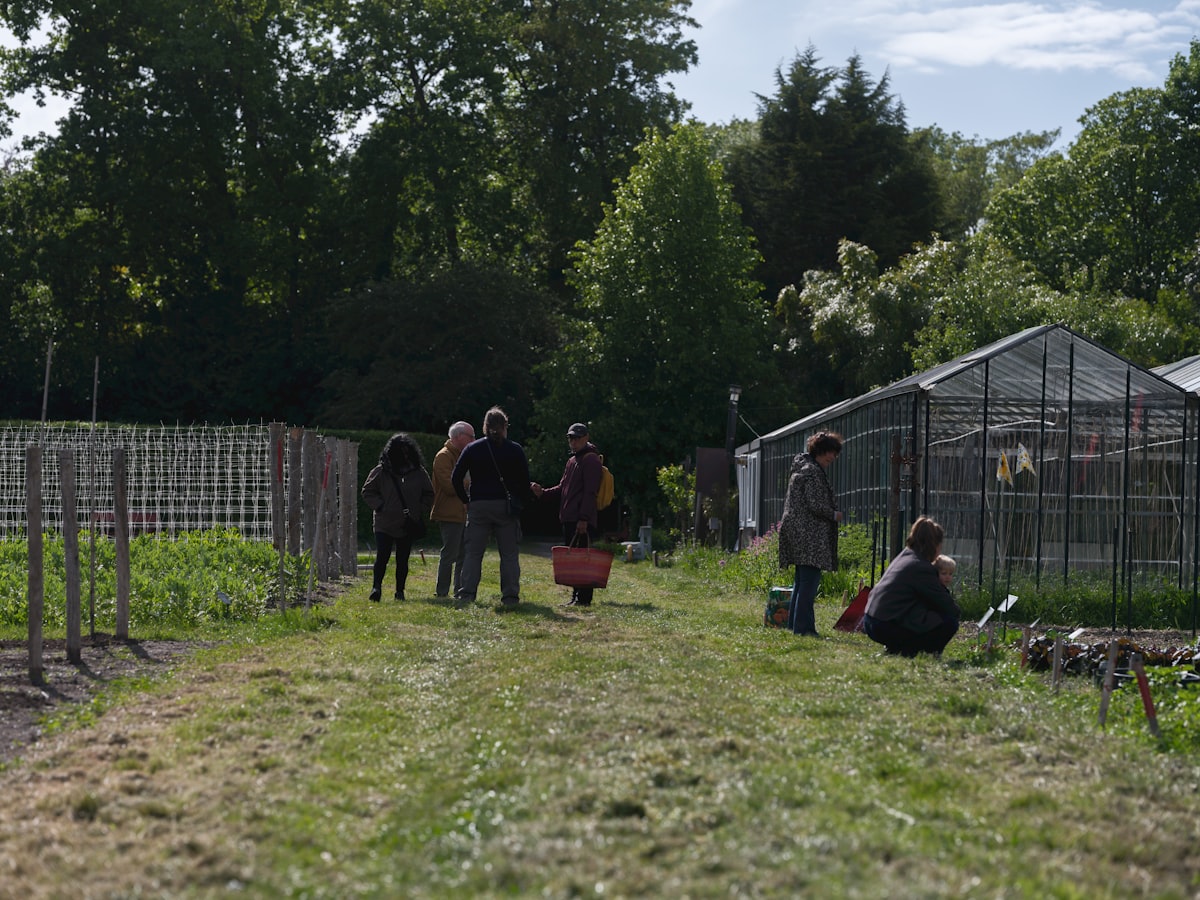
Not a Textbook. A Research Process.
David Wechsler is an independent researcher, educator, and systems engineer who explores the intersection of phytoremediation, agricultural electricity, soil biology, and plant physiology. For years, he has documented field experiments, studied historical and emerging research, and developed practical methods for applying energetic technologies to environmental restoration.
His first major phytoremediation initiative was the Sunflower+ Project, a community-driven effort that combined volunteer participation with world-class education to remediate lead-contaminated post-industrial urban soils using sunflowers and complementary remediation strategies. The project served as both a research platform and a public demonstration of how communities can participate directly in ecological restoration.
David approaches this field not as someone claiming to have all the answers, but as a disciplined experimentalist committed to careful observation, rigorous documentation, and following the evidence wherever it leads. This course shares both established phytoremediation science and the emerging ideas that deserve thoughtful investigation.
He believes these positions are entirely compatible: established science provides the essential foundation; new technologies and unconventional ideas deserve careful, evidence-based testing; and genuine progress comes from curiosity, intellectual honesty, and reproducible experimentation—not certainty.
"This course isn't about proving a technology. It's about learning how to investigate nature with rigor, curiosity, and enough humility to change our minds." — David Wechsler, Energetic Growers Academy
Tell Us Where You Stand
Courses are presently in various stages of development, some complete, some just starting, and others someplace inbetween. We are validating interest and building curriculum. Registering now means founding member (low-cost!) pricing, first access, and the ability to shape what gets built.
Register Your Interest
Questions We Expect You to Have
Is electrokinetic or electroculture-enhanced remediation a proven technology?
Electrokinetic remediation has an established research literature — peer-reviewed studies document ion transport, pH fronts, and contaminant mobility under applied DC fields. Electroculture as a remediation enhancement is far less studied, and we present it as an emerging experimental area, not an established practice. We will be explicit about the difference throughout every module.
Who is the Community Track designed for?
The Community Track requires no technical background. If you can read a soil test report, follow a planting guide, and fill out a field observation sheet, you can complete every module. We do use scientific terminology but explain every term when it first appears.
Who is the Practitioner Track designed for?
The Practitioner Track assumes familiarity with environmental science concepts, basic chemistry, and some field work experience. You do not need an engineering degree, but you should be comfortable with units, basic electrochemistry concepts, and experimental thinking. A background in agronomy, ecology, environmental consulting, or related fields is ideal.
What does "energetically enhanced" mean exactly?
We use "energetically enhanced" to describe approaches that introduce or harness energy inputs — applied electric fields, atmospheric charge collection, electromagnetic antenna systems — to potentially improve biological or chemical remediation outcomes. It is a descriptive term for an experimental category, not a claim that these enhancements are proven effective in all or most cases.
When will courses be available?
Community Track materials are in active development. The target launch window for the first Community Track course is late 2026. Practitioner Track courses will follow in sequence. Founding members and early waitlist registrants receive access first, at locked-in pricing.
What is the Sunflower+ Project, and how does it relate to this?
The Sunflower+ Project is a citizen science initiative that documents community-run phytoremediation efforts — primarily sunflower plantings on potentially contaminated sites. It generates real field data that informs course content, and Community Track students can contribute their own observations to the dataset.
I have a contaminated site I need help with right now. Can you help?
For urgent or regulated contamination, you need a licensed environmental professional. We can help you understand the science, the options, and the questions to ask — but these courses are not a substitute for professional site assessment. We are also exploring consulting engagements for organizations interested in pilot projects; use the consulting inquiry link below if that is relevant to you.
Can my organization partner on a pilot project?
Yes. We are actively looking for community organizations, municipalities, and land managers interested in structured pilot projects combining phytoremediation with experimental enhancement monitoring. These would be documented, shared with consent, and contribute to the broader research base. Fill out the pilot project inquiry form below.

The Sunflower+ Project
The Sunflower+ Project was conceived by an originating team exploring community-led phytoremediation documentation. After David Wechsler shared his work on the electroculture-enhanced phytoremediation angle, the founding team invited him to contribute that dimension to the project.
The project procured and planted sunflowers which are among the best-documented heavy metal hyperaccumulators — on sites with known or suspected contamination. Participants collected soil samples, tended site preparation, and took care of the land while growth took place. Results are aggregated with consent and made available project stakeholders.
David's specific contribution is the electroculture enhancement layer: designing and documenting passive and active electrical interventions alongside the phytoremediation protocol, to investigate whether energetic approaches measurably affect outcomes.
"The originating team built the community infrastructure. I came in to ask what happens when you add the energetic dimension — and to build a methodology rigorous enough to actually find out." — David Wechsler, Sunflower+ Project contributorParticipate in the Project →
This Is the Beginning of a New Multidisciplinary Aspect of Environmental Cleanup
Energetically Enhanced Remediation is not yet an established discipline. It is a hypothesis — backed by interesting literature, plausible mechanisms, and a genuine need — being tested by practitioners who are willing to document what they find. If that sounds like where you want to be, register your interest now.