Test electroculture this weekend. See what your plants show you.

Rooted in research. Grounded in history. Validated by pioneers like you.

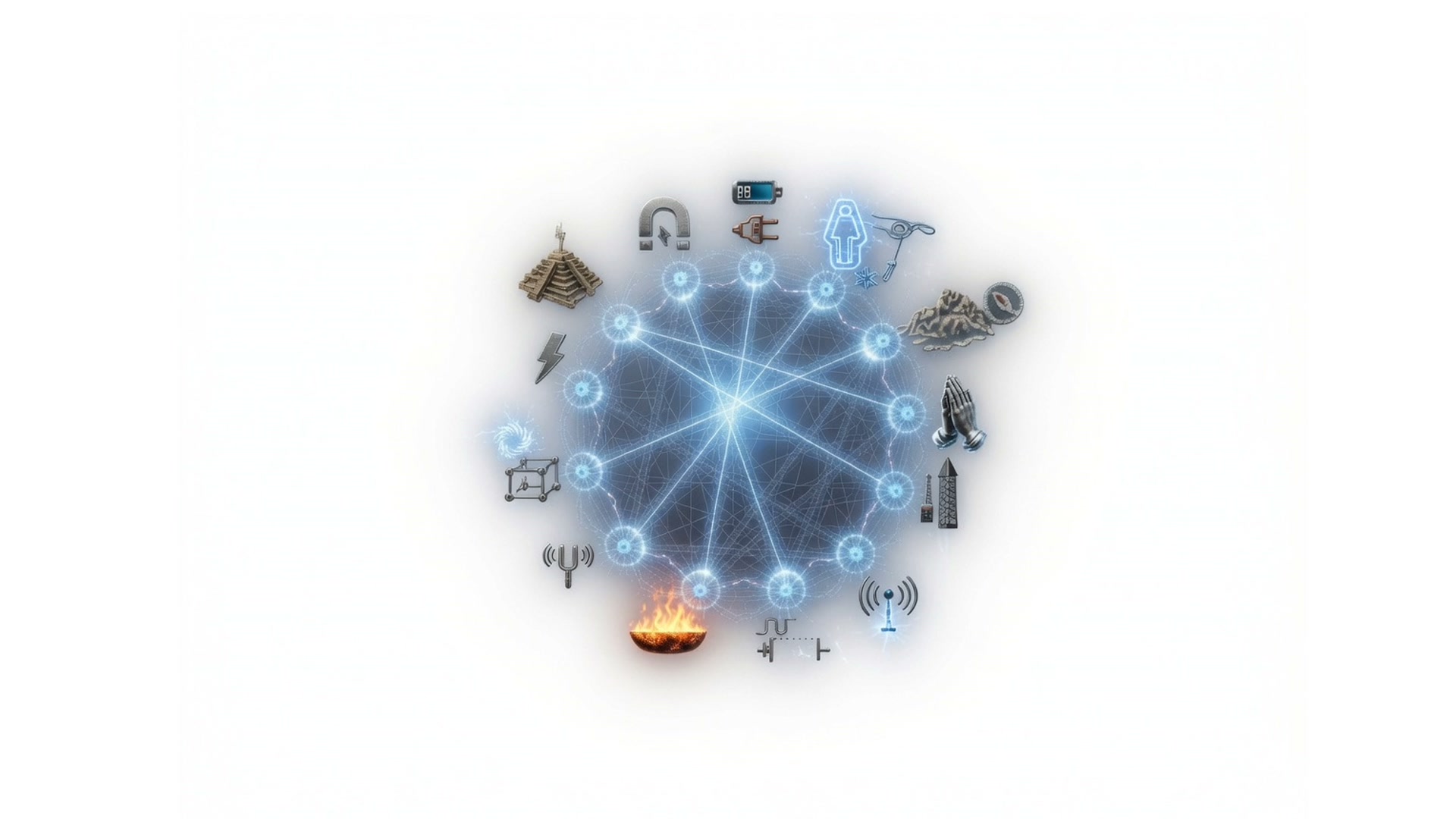
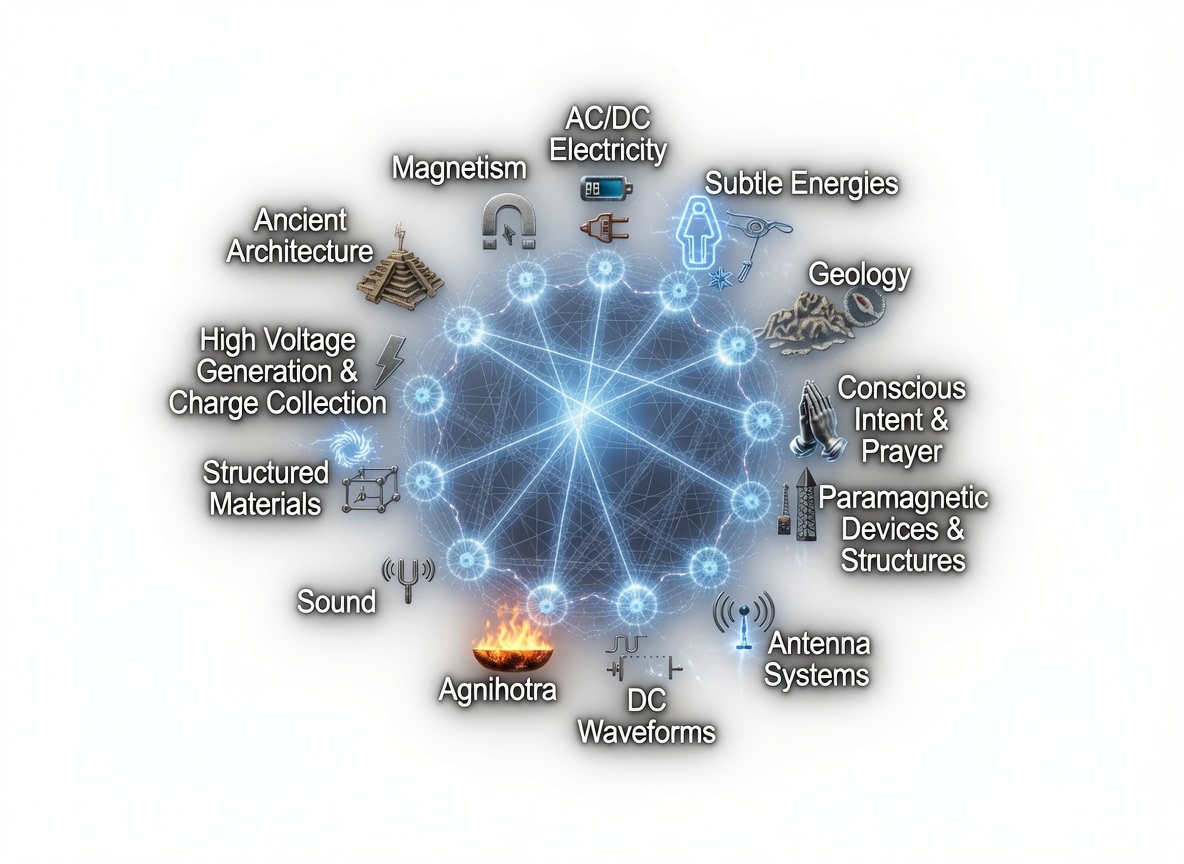
Hover any icon to see the discipline behind it.

Test electroculture this weekend. See what your plants show you.

Rooted in research. Grounded in history. Validated by pioneers like you.

Atmospheric electricity is the most accessible layer — a small, constant charge between sky and soil that every plant already lives inside. You can test it in your own space this weekend, with tools you likely already have.

18/23 Mechanisms Cited & Rated
25/33 Records Peer-Reviewed
2 Published Null Results

You test. Your results join thousands of others. Together, we validate what works.

By joining us in this work, citizen science becomes our defense against corporate capture.

Tinkerer
+55.6% fruit yield by weight Tap for methodology →
Tinkerer
Conditions
5-gallon self-watering buckets, standard potting mix, started indoors under LED and finished outdoors. Treated buckets ran 12V pulsed DC (50–100 mA) through two 6-inch copper rods spaced 4 inches apart: 2s on, 8s off, two hours each morning, current checked with a multimeter.
Sample size
5 treated vs. 5 control buckets, run by a single outside grower. No statistical test was applied at this sample size, and moving the buckets from indoors to outdoors partway through added a variable we didn't control for.
Measurement
Fruit yield: 26.6 kg treated vs. 17.1 kg control (+55.6%), 187 vs. 124 fruits (+50.8%). Plant height was up 11% by week 6.
Experiment ID
Experiment 001 — first-party, in-house; not peer-reviewed, no DOI.
Tap to return ←
Null Result
Bar charts of aboveground biomass production for beets, turnips, mustard greens, and kale, copper-treated vs. control
Fig 4, Chier et al. 2025, PLOS ONE — CC BY 4.0 No consistent yield, growth, or photosynthesis gain Tap for methodology →
Null Result
Conditions
Home container gardening across four crops: mustard greens, kale, beets, and turnips, each grown with passive copper rod treatments against untreated controls.
Sample size
Not reported in the source study.
Measurement
Passive rods generated only 2–20 mV, well below the threshold needed to influence plant physiology. One crop, turnips, did gain biomass — the study authors attribute that to copper leaching into the soil as a micronutrient, not to any electrical effect.
Experiment ID
Chier, Oakey, Budny & Lemoine, PLOS ONE 2025 (DOI 10.1371/journal.pone.0329615). EF-ID pending — confirm with David before this reads as a numbered EF result.
Tap to return ←
Professional
+38.7% seed yield (p < 0.001) Tap for methodology →
Professional
Conditions
Two winter seasons (2009/10, 2010/11) on sprinkler-irrigated sandy soil, randomized plot design, 4 replications. Irrigation water ran through a Magnetron U.T.3 magnetizer vs. untreated water, on a single canola variety (Serw-6).
Sample size
n=15 for growth metrics, n=8 for yield and water-use efficiency.
Measurement
Seed yield rose from 502.5 to 697.0 kg/feddan (+38.7%, p<0.001); oil yield gained 58.5%, water-use efficiency improved by the same margin. This is magnetic-water treatment, not electrode-based electroculture, run at a single site in Egypt — the magnetizer's field-strength spec wasn't reported, which limits exact replication.
Experiment ID
Hozayn et al. 2016, African Journal of Agricultural Research (DOI 10.5897/AJAR2015.9382).
Tap to return ←
Learning Pillars

Three Pillars of Energetic Agriculture

Every EGA course maps to one of three research pillars — from measurable electrical forces to the deeper energetic fields that modern science is only beginning to quantify.

⚡

Active Electroculture

Direct electrical stimulation of plants, seeds, and soil — high- and low-voltage delivery, frequency-specific control, active current to root zones and foliar systems. Measurable voltages, quantifiable outcomes.

HVDC Pulsed Fields Ion Flow Bioelectric
🌀

Passive Electroculture

Antenna-culture, copper spirals, and Lakhovsky coils harvest and distribute atmospheric electricity — no power input, no moving parts.

Antennas Coils Atmospheric Electricity
✦

Subtle Energy

The frontier past everyday electromagnetics — torsion fields, biofields, shape effects. Some of it has intriguing early data. None of it is settled. We treat it the way we treat everything else: as something to test.

Torsion Orgone Biofield Pyramid Shape Power

Start where our own experiments started.

Spiral Antennas thumbnail
Intermediate 8 Modules · 8 hrs

Spiral Antennas

A field-practitioner's guide to passive electroculture through resonant geometry. From the physics of spiral antennas and Lakhovsky coils to real-world array layout — how copper geometry shapes the electric field your plants live in.

Spiral AntennasLakhovskyPassive ECCopper GeometryAtmospheric Charge
Free Starter Access

Begin Learning — No Cost

Three complete modules, free — no account, no email. Run the first experiment before you decide anything.

Research Library

Backed by Documented Experiments

EGA courses draw from the ElectricFertilizer research library — 47+ documented experiments with tagged claims, mechanisms, and outcomes. Claim summaries are free; full methodology is in the courses.
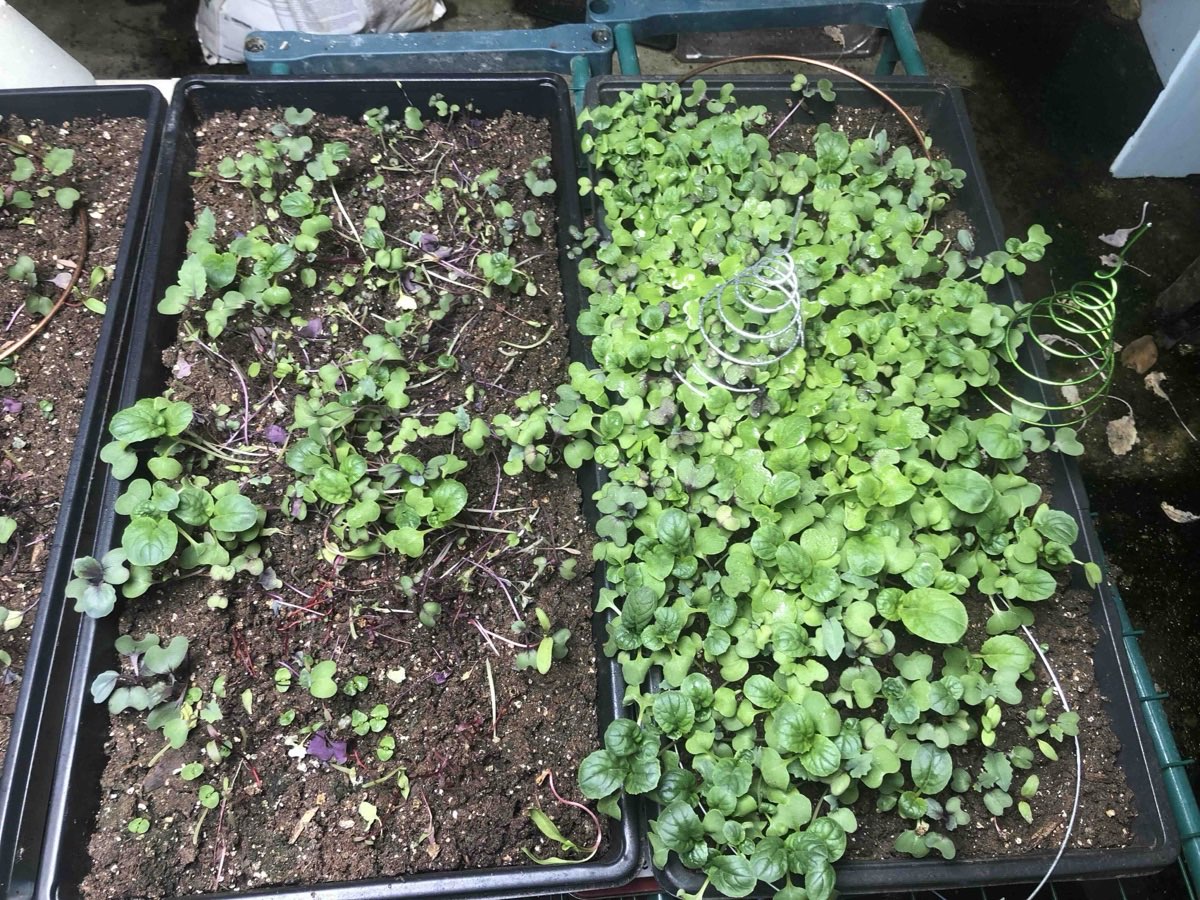
Copper vs. Galvanized L-Coils & Spiral Antennas: A Basement Tray Comparison illustration
DW-2022-06 Passive EC

Copper vs. Galvanized L-Coils & Spiral Antennas: A Basement Tray Comparison

CopperGalvanized SteelL-CoilSpiral AntennaPassiveHome Trial

Run the first experiment free.

Three modules, no account. Let your plants tell you if this is worth your time.